Material Research
Funori — Seaweed Algae Binder
A red-algae glue from Kyoto — gentle, reversible, and nearly the opposite of rabbit skin glue in how it's made and used
Funori is a polysaccharide glue extracted from red algae, central to Japanese nihonga painting and paper conservation — where RSG's soaking water is the glue, funori's soaking water is discarded, and the real adhesive only comes out under gentle heat.
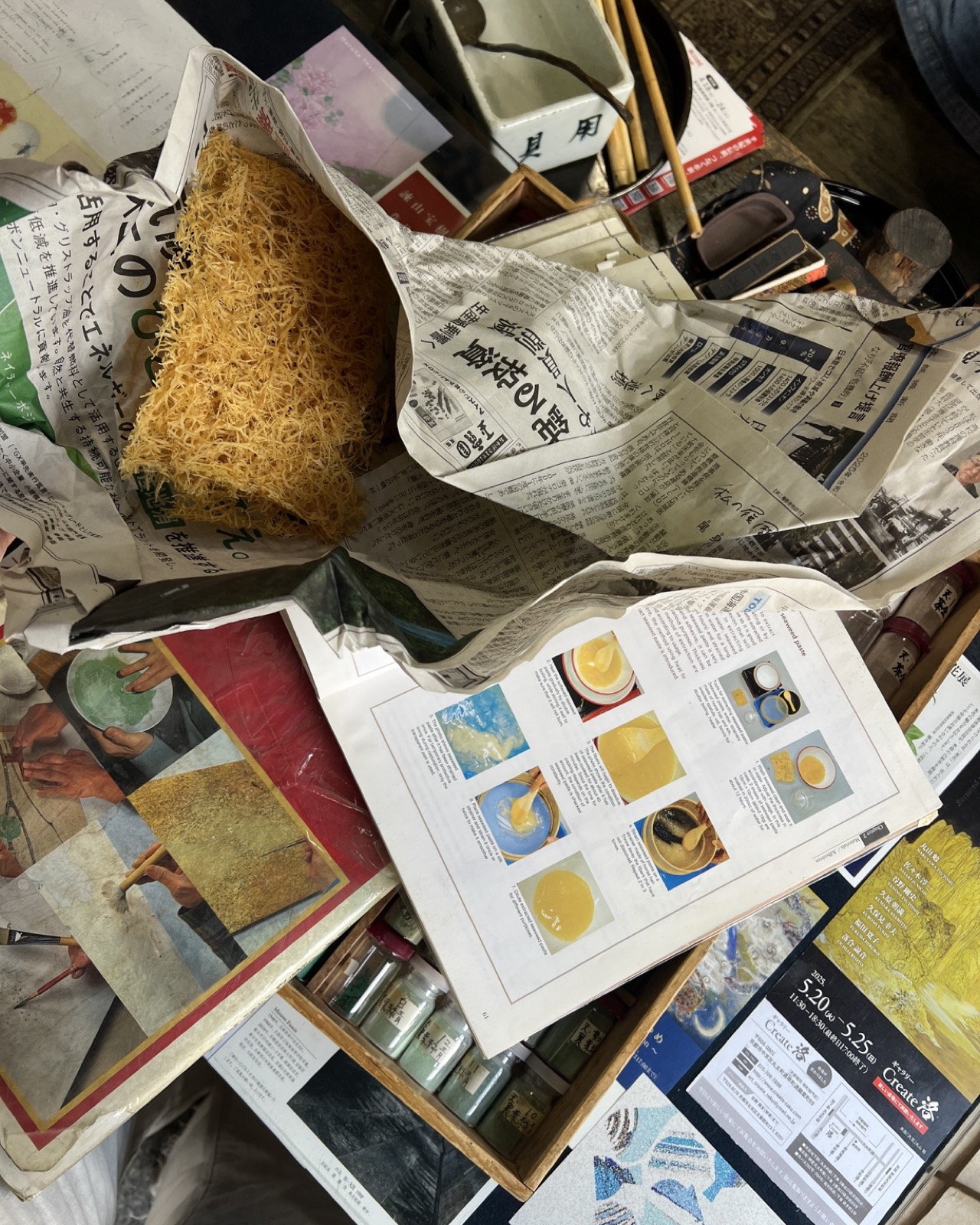
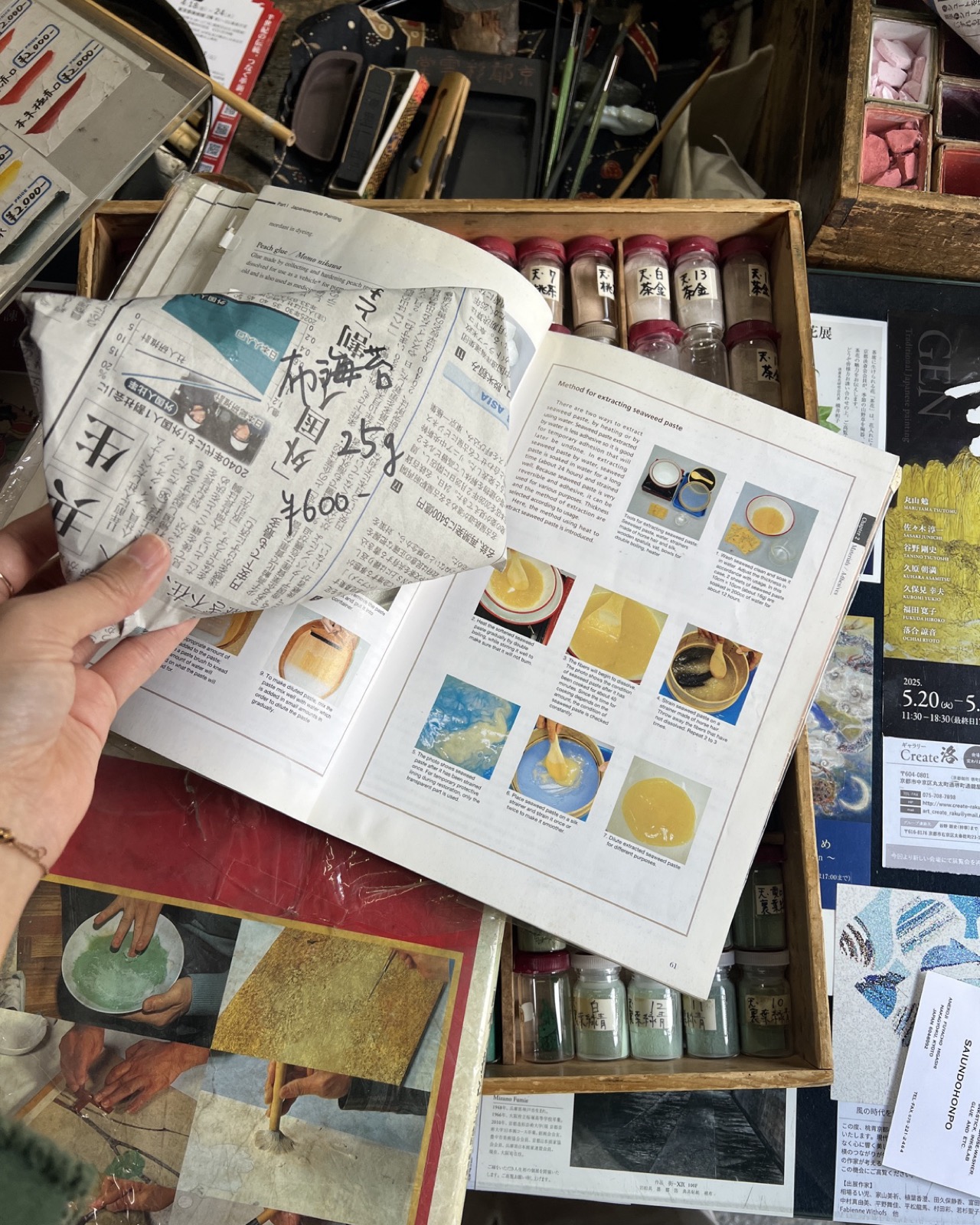
Picked up in Kyoto — a coil of dried red algae, the kind used in traditional Japanese painting and paper conservation. It looks like nothing: a dry, wiry tangle. But it's one of the gentlest binders in the natural-materials toolkit, and it behaves almost nothing like the rabbit skin glue (RSG) already in the studio.
What it is
Funori (布海苔) is a glue extracted from red algae — a polysaccharide-based binder, not an animal protein like RSG. It's a staple of nihonga (Japanese-style painting) and paper conservation: gentle enough for silk, washi, and pigment binding, and reversible enough that conservators prize it for exactly that reason.
Extraction is the opposite of RSG
This is the part that trips people up coming from an RSG background. With rabbit skin glue, the soaking water is the glue — you never discard it. With funori, the soaking water is mostly salt, dust, and colour leaching out of the dried algae. You discard it. The real adhesive only releases once you apply gentle heat.
- Rinse briefly under cold water to knock off surface dust and salt.
- Soak in fresh cold water, changing the water 2–3 times over 6–24 hours, until it runs close to clear. Each change removes more impurity, not adhesive strength.
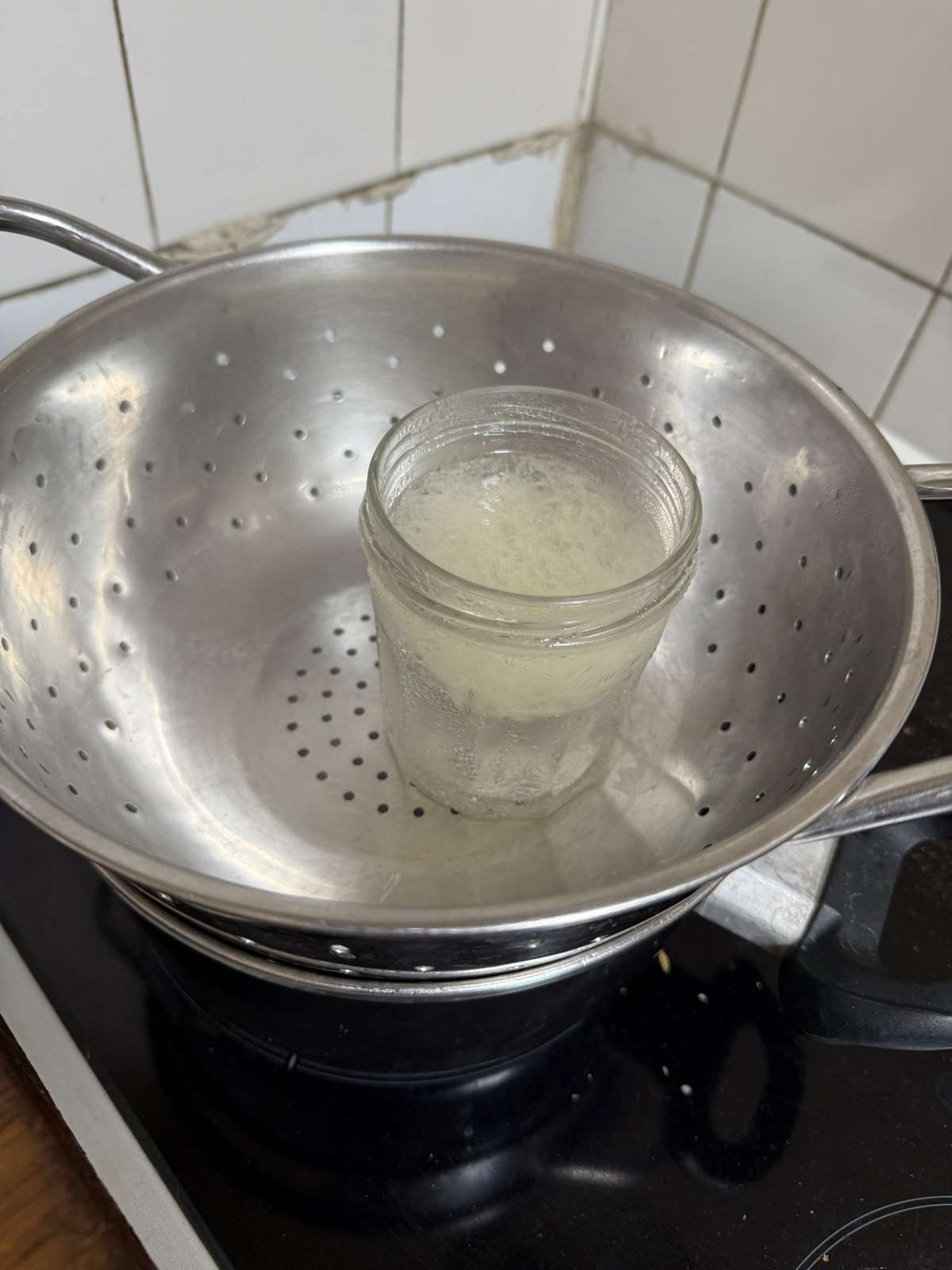
- Heat-extract the softened algae in fresh water via a double boiler, held at 40–60°C — never boiling. Boiling breaks down the polysaccharide and destroys the very binding strength you're trying to extract. Think of it as drawing out a broth, not dissolving the material completely; the leftover fibre is discarded, the clear liquid is kept.
- Strain through cheesecloth or a fine sieve before use.
Concentration is far more dilute than RSG
Where RSG runs roughly 1:10 (about 10%), funori solutions are used at 0.3–1% — a fraction of the strength.
- 0.3% for pigment binder or fixing fibre/paper — thin enough to stay workable and matte.
- 0.8–1% for priming or sizing — still far weaker than an RSG ground.
A modest 50g of dried algae yields roughly 5–10 litres of usable solution across both concentrations — enough to size a dozen or more small-to-mid canvases, with material left over for pigment work.
Priming behaves differently, too
Funori doesn't form the tight, hide-like film RSG does. It stays thin, absorbent, and a little porous — closer to an absorbent ground than a true barrier size. That means several thin coats (3–5), each fully dried before the next, rather than RSG's two-to-three-coat routine. The resulting surface takes pigment in a soft, matte way — closer to washi or unsized paper than a classically primed panel.
It doesn't gel when it cools
This is the biggest practical difference from RSG. Rabbit skin glue gels almost the moment it cools — you have to keep reheating it to keep working. Funori stays liquid at room temperature. Warm application still helps it penetrate fibre more evenly, but you're not racing a clock the way you are with RSG. The trade-off: it spoils faster. Refrigerate and use within 3–5 days — it's a living, fermentable material, not a shelf-stable one.
Jay's Studio Note
The instinct I had to fight was "boil it until it dissolves completely" — that's the RSG reflex, and it's exactly wrong here. With funori you're coaxing a broth out of the fibre, not melting the fibre itself. The first change of soaking water genuinely looked like nothing was happening — just cloudy, faintly salty water. It's only after the heat that the actual glue shows up.
What I like about it as a studio material is the reversibility. RSG grounds feel permanent once they're dry. Funori feels closer to something you could still talk to later — re-wet it, adjust it, work with it again. That fits better with how I think about a lot of the paper and fibre work happening in the studio right now.
References
- Traditional Japanese nihonga painting practice and paper conservation literature on funori (布海苔) as a reversible, low-strength polysaccharide adhesive.
- Material sourced in Kyoto, Japan, 2026 — dried funori algae, unprocessed coil form.
- Double boiler extraction photographed during a residency at L'AiR Arts, Paris.
- See also: Animal Glue — 아교 (Agyo) and Traditional Gesso for comparison against protein-based (RSG) binders.
Water Ratio Calculator
| Purpose | Dried funori | Water |
|---|---|---|
| Pigment Binder (0.3%) | 5g | 1667ml |
| Priming — Standard (1%) | 5g | 500ml |
| Priming — Thin First Coat (0.8%) | 5g | 625ml |
Ratio Calculator
Thin, matte solution for binding pigment or fixing fibre/paper.
Related Materials
Agar Bioplastic
A seaweed-based flexible bioplastic — sheets, films, and castings from red algae
Indigo Vat — 3-2-1 Fructose Recipe
Natural indigo fermentation vat using fructose as reducing agent and calcium hydroxide as alkali
Drying Oils & Resins
Linseed oil, perilla oil, sun-oxidized linseed, Canada Balsam, pine resin — binders for oil painting and natural varnishes
Starch Bioplastic
Corn, tapioca, and wheat starch bioplastics — the most accessible and food-based biomaterial recipe
Distemper
Animal glue paint — dry and matte, with a color shift on drying — the European counterpart to egg tempera
Casein & Milk Paint
Milk protein as binder — opaque and matte, the pair to egg tempera in natural paint practice
Learn This in the Studio
Work with this material hands-on in a workshop, or book a private material consultation for your specific project.